University of Manchester · Glyco-Immunology Lab

The glycocalyx is not a bystander —
it is the primary regulator
of immune cell recruitment.

We investigate how the glycocalyx on endothelial and immune cells controls leukocyte trafficking during inflammation, and how proteoglycans act as direct chemokine receptors to drive — or resolve — pathological immune responses.

Our research Publications Join us Manchester, UK · Est. 2020

Our science

What we study

There is exquisite control of immune cell recruitment to all bodily tissues. In injury and disease, such control is important to appropriately resolve the insult or infection whilst limiting inflammation that can drive pathology. Chemokines mediate immune cell recruitment and are heavily implicated in pathological inflammation — but have not been successfully therapeutically targeted, due to limited understanding of their basic biology. We believe the glycocalyx holds the answer.

CXCL4

recruits immune cells via proteoglycans, not chemokine receptors

HS

glycocalyx on leukocytes regulates their own recruitment

GAGs

decode complex multi-chemokine signals in disease

BBB

heparan sulfate mediates CXCL4 transport across the blood-brain barrier
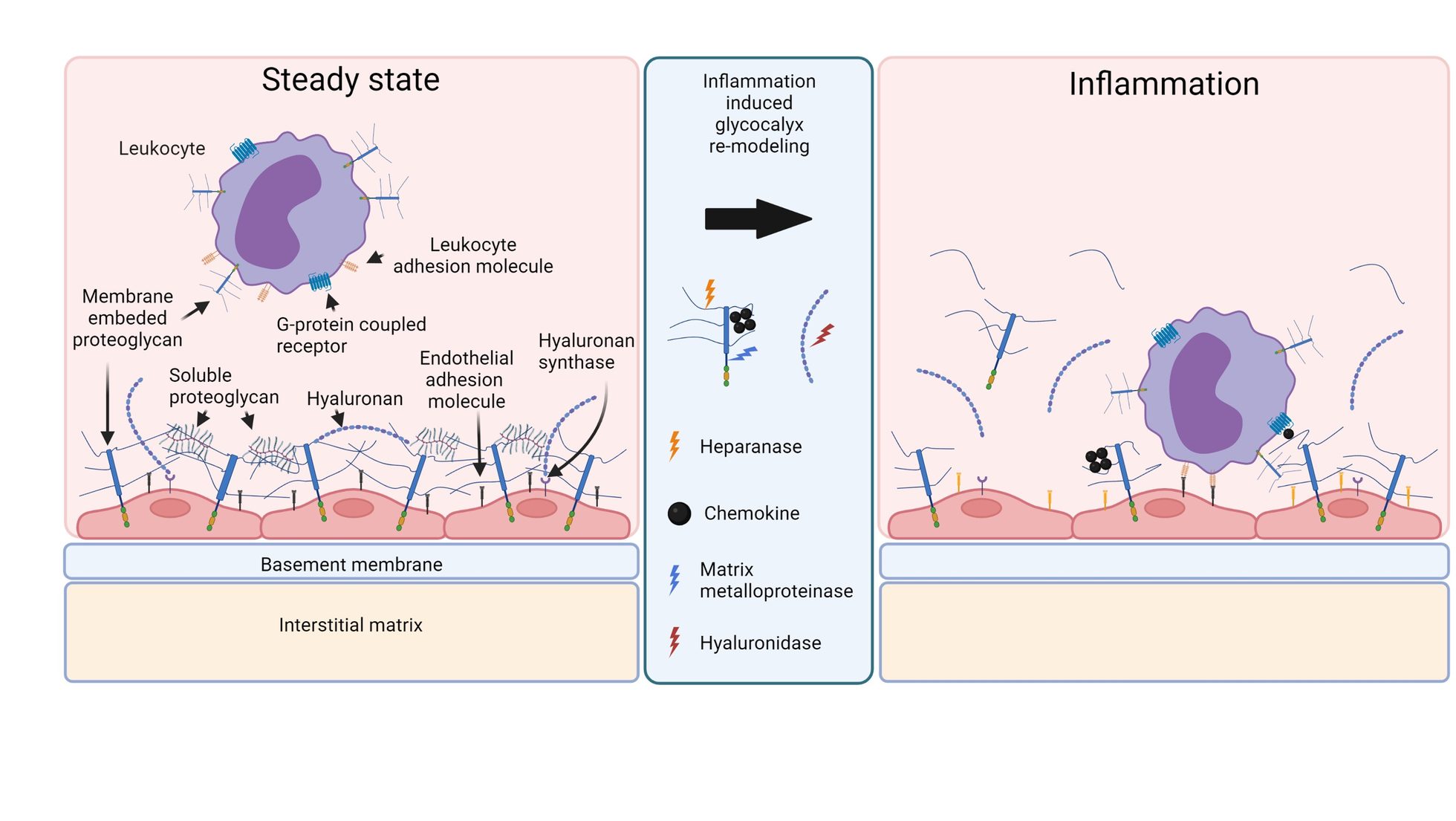
Diagram showing glycocalyx remodelling during inflammation: leukocyte recruitment driven by heparanase, chemokines and matrix metalloproteinases
Inflammation-induced glycocalyx remodelling facilitates leukocyte recruitment. During inflammation, enzymes including heparanase, matrix metalloproteinases, and hyaluronidase remodel the endothelial glycocalyx, releasing chemokines and exposing adhesion molecules. Figure from: Sutherland T.E., Dyer D.P., Allen J.E. The extracellular matrix and the immune system: a mutually dependent relationship. Science 379 (2023).
01

The glycocalyx as a physical regulator of immune recruitment

The glycocalyx on endothelial and immune cells physically regulates the molecular interactions required for leukocyte recruitment into inflamed tissues. We are defining how its structure and composition gate the adhesion cascade during inflammation — including how the leukocyte's own glycocalyx controls its recruitment.

02

Proteoglycans as chemokine receptors

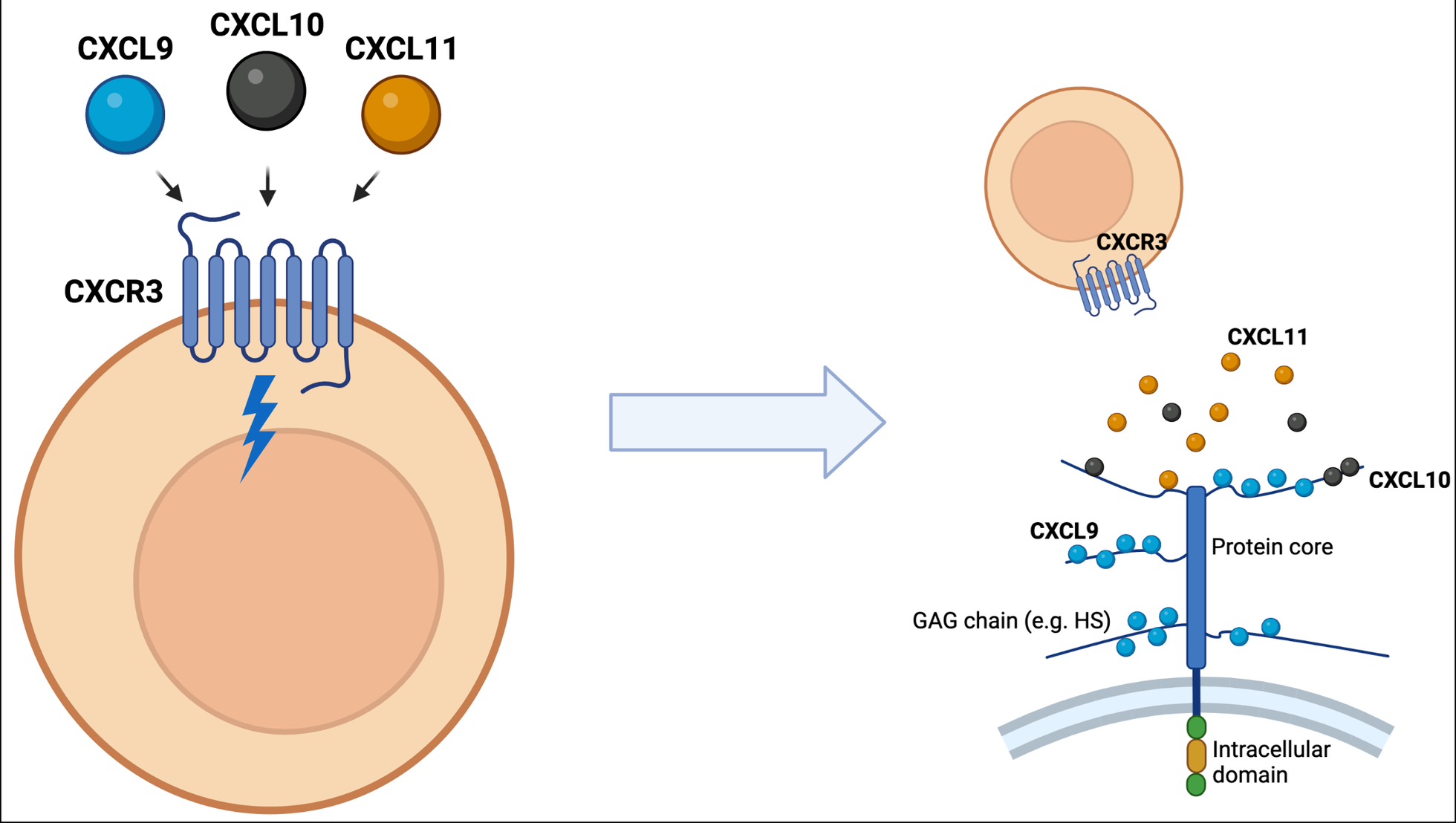
Proteoglycans within the glycocalyx can act directly as chemokine receptors, driving immune cell recruitment during pathological inflammation independently of canonical GPCRs. Our Cell Reports paper demonstrated that CXCL4 mediates widespread leukocyte recruitment entirely through extracellular matrix proteoglycans. This fundamentally reframes chemokine biology.

03

Glycocalyx remodelling in disease

We study how the glycocalyx is remodelled during inflammation, viral infection, and ageing — and what consequences this has for chemokine signalling, immune cell trafficking, and tissue homeostasis across organs including skin, lung, brain, and peritoneum.
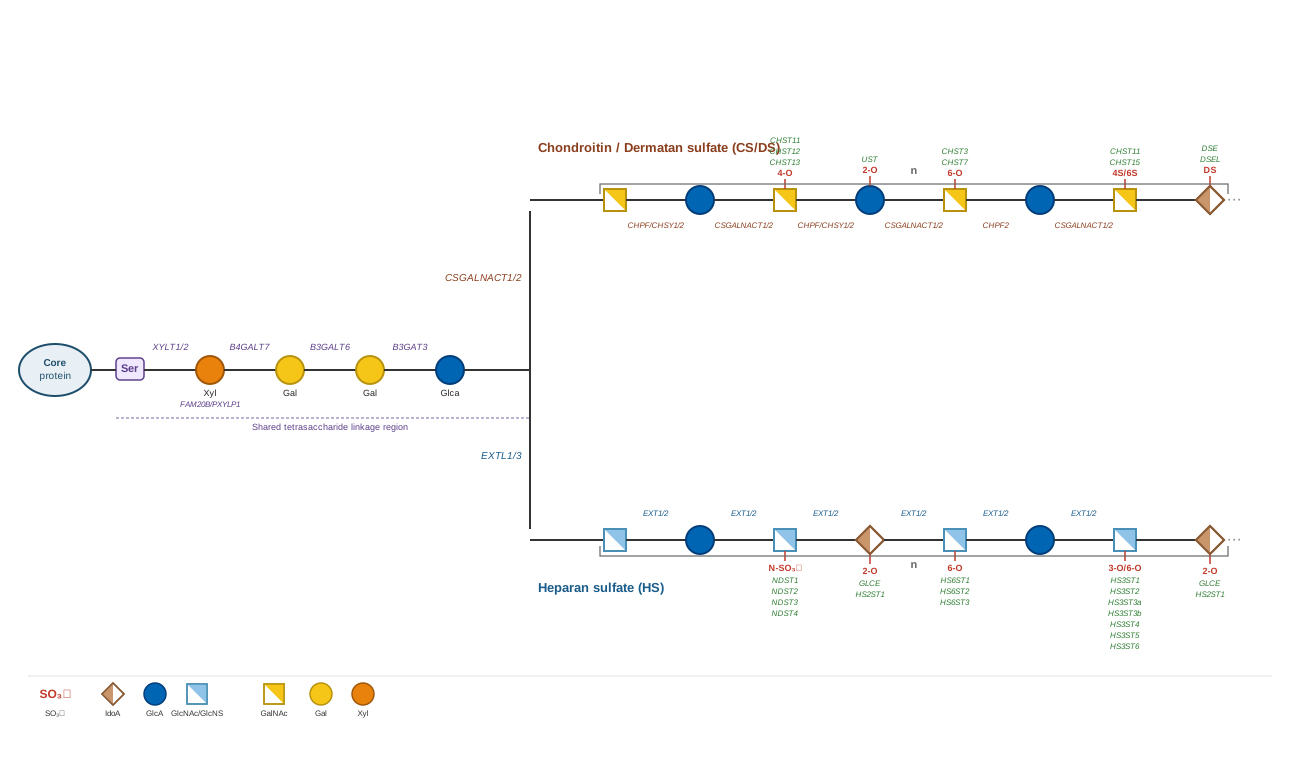
Biosynthesis of heparan sulfate and chondroitin/dermatan sulfate from a shared tetrasaccharide linkage region on a core protein, with the enzymes responsible for each step
Heparan sulfate (HS) and chondroitin/dermatan sulfate (CS/DS) are built on a shared tetrasaccharide linkage region attached to a serine of the core protein, then diversified by chain-specific polymerases, epimerases and sulfotransferases. The gene encoding each step is shown; it is this enzymatic combinatorics that generates the structural diversity our work reads out. Download as PDF →

The team

People

DD

Dr Douglas Dyer

Principal Investigator
University of Manchester
Glyco-Immunology Lab

Wellcome Career Development Award (2025) Wellcome / Royal Society Sir Henry Dale Fellow UoM Presidential Fellow Manchester Cell-Matrix Centre · Leadership Wellcome Discovery Research Platform · Glycomatrix Lead

Dr Dyer completed his PhD at the University of Manchester, studying an anti-inflammatory protein that regulates chemokines and leukocyte recruitment. This work laid the foundation for a career focused on the molecular basis of immune cell trafficking.

He then moved to the University of California, San Diego for a postdoctoral fellowship working directly on interactions between chemokines and the extracellular matrix during leukocyte migration, before returning to the UK to undertake a second postdoc at the University of Glasgow, where he studied chemokine receptor function in vivo.

In 2020, Dr Dyer established the Glyco-Immunology Lab at the University of Manchester on a UoM Presidential Fellowship, supported by a Wellcome Trust and Royal Society Sir Henry Dale Fellowship. In 2025 he was awarded an 8-year Wellcome Trust Career Development Award to continue and expand the programme.

He is a member of the leadership team of the Manchester Cell-Matrix Centre and leads the Glycomatrix theme within the Wellcome Trust Discovery Research Platform that supports the Centre.

Postdoctoral researchers

AR

Dr Amanda Ridley

Role of CXCL4 in tissue-resident macrophages

Investigating how macrophage-derived CXCL4 regulates tissue-resident macrophage identity and communication with neighbouring cell populations.

TG

Dr Tara Gleeson

Proteoglycan-mediated chemokine signalling

Dissecting the mechanisms by which proteoglycans act as functional chemokine receptors, independent of classical GPCRs.

HD

Dr H Davies-Strickleton

Glycan analysis methods

Developing and adapting mass spectrometry-based approaches for label-free GAG disaccharide analysis across diverse biological sample types.

SD

Dr Samie Dalgarno

Glycans across biology and the microbiome

Exploring how glycan structures regulate biological processes beyond canonical immunity, including interactions with the gut microbiome.

PhD students

IN

Iashia Nabi

Glycocalyx and influenza

Researching the role of the airway macrophage glycocalyx in regulating the immune response to influenza infections in the lung.

KL

Kirstin Lowe

Brain borders and immunity

Investigating glycocalyx and chemokine regulation of immune responses at the brain borders, with implications for neuroinflammation.

JR

Jessica Robinson

Glycocalyx in ovarian cancer

Understanding the role of the tumour glycocalyx in ovarian cancer, focusing on how it shapes immune infiltration and disease progression.

Jointly supervised

IU

Ivy Usansky

Stroke and co-morbidities

Studying glycocalyx regulation of stroke responses and disease co-morbidities.

EW

Emily Wright

Parasite infections

Chemokine and glycocalyx control of the immune response to parasite infections.

Alumni

Dr Anna Gray

PhD · Glycocalyx intravital imaging and CXCL4

Dr Nabina Pun

Postdoc · Radiotherapy and monocyte recruitment

Dr Megan Priestley

Postdoc · Leukocyte glycocalyx in psoriasis

Latest

News

2025

8-year Wellcome Trust Career Development Award secured

Dr Dyer has been awarded a Wellcome Trust Career Development Award to continue and expand the lab's research programme into glycocalyx regulation of immune cell trafficking and chemokine biology.

2025

New paper: leukocyte glycocalyx regulates psoriasis-like inflammation

Our work demonstrating that leukocytes carry a heparan sulfate glycocalyx that actively regulates their own recruitment during skin inflammation is published in Science Signaling.

2025

CXCL4 blood-brain barrier paper submitted to Science Signaling

Our preprint on heparan sulfate-mediated CXCL4 transport across the blood-brain barrier and effects on neurogenesis has been re-submitted following favourable reviews.

2023

CXCL4 drives immune recruitment independently of chemokine receptors

Our Cell Reports paper demonstrates that CXCL4 interactions with extracellular matrix proteoglycans mediate widespread immune cell recruitment independently of canonical chemokine receptors — reframing a longstanding question in the field.

Open positions

Join the lab

We are always interested in hearing from motivated scientists at all career stages. The lab offers a collaborative, intellectually rigorous environment with strong links to the Manchester Cell-Matrix Centre and Wellcome Discovery Research Platform. We are committed to building an inclusive and diverse research environment.

Postdoctoral Research Associate

Glycocalyx biology and chemokine signalling · Wellcome-funded

Enquire

PhD studentships

Multiple projects available · contact us to discuss opportunities and funding

Enquire

Visiting scientists and rotation students

Welcome by arrangement

Enquire

Candidates should send a CV and a short note on their research interests and why they are drawn to the lab's work to douglas.dyer@manchester.ac.uk.

Get in touch

Contact

Address

Glyco-Immunology Lab
Faculty of Biology, Medicine and Health
University of Manchester
Oxford Road
Manchester, M13 9PT
United Kingdom

University profile →
Manchester Cell-Matrix Centre →

Enquiries

Email: douglas.dyer@manchester.ac.uk

For recruitment enquiries please include your CV and a short covering note. For collaboration enquiries we are particularly interested in groups working in glycomics, structural biology, and inflammation biology.

Google Scholar · ORCID